Large appliance removal covers heavy household machines such as refrigerators, washers, dryers, stoves, and dishwashers. These items may need careful handling because of their size, wiring, plumbing, gas, or refrigerant. Puyallup property owners can use this guide to prepare appliances and choose a safe path for reuse, recycling, or disposal.
Table of Contents
- What Is Considered a Large Appliance for Removal?
- Which Appliances Can a Junk Removal Service Pick Up?
- How Should You Prepare a Large Appliance for Removal?
- How Are Large Appliances Disposed Of or Recycled?
- Are There Special Disposal Rules for Refrigerators and Freezers?
- What Affects Large Appliance Removal Planning?
- When Should You Hire Professional Large Appliance Removal?
- Frequently Asked Questions
- Conclusion
What Is Considered a Large Appliance for Removal?
A large appliance is a heavy home machine that is hard to move by hand. Most need two or more people, moving tools, or careful planning. They may contain metal, glass, wires, insulation, oil, or refrigerant.
Refrigerators, Freezers, and Other Cooling Appliances
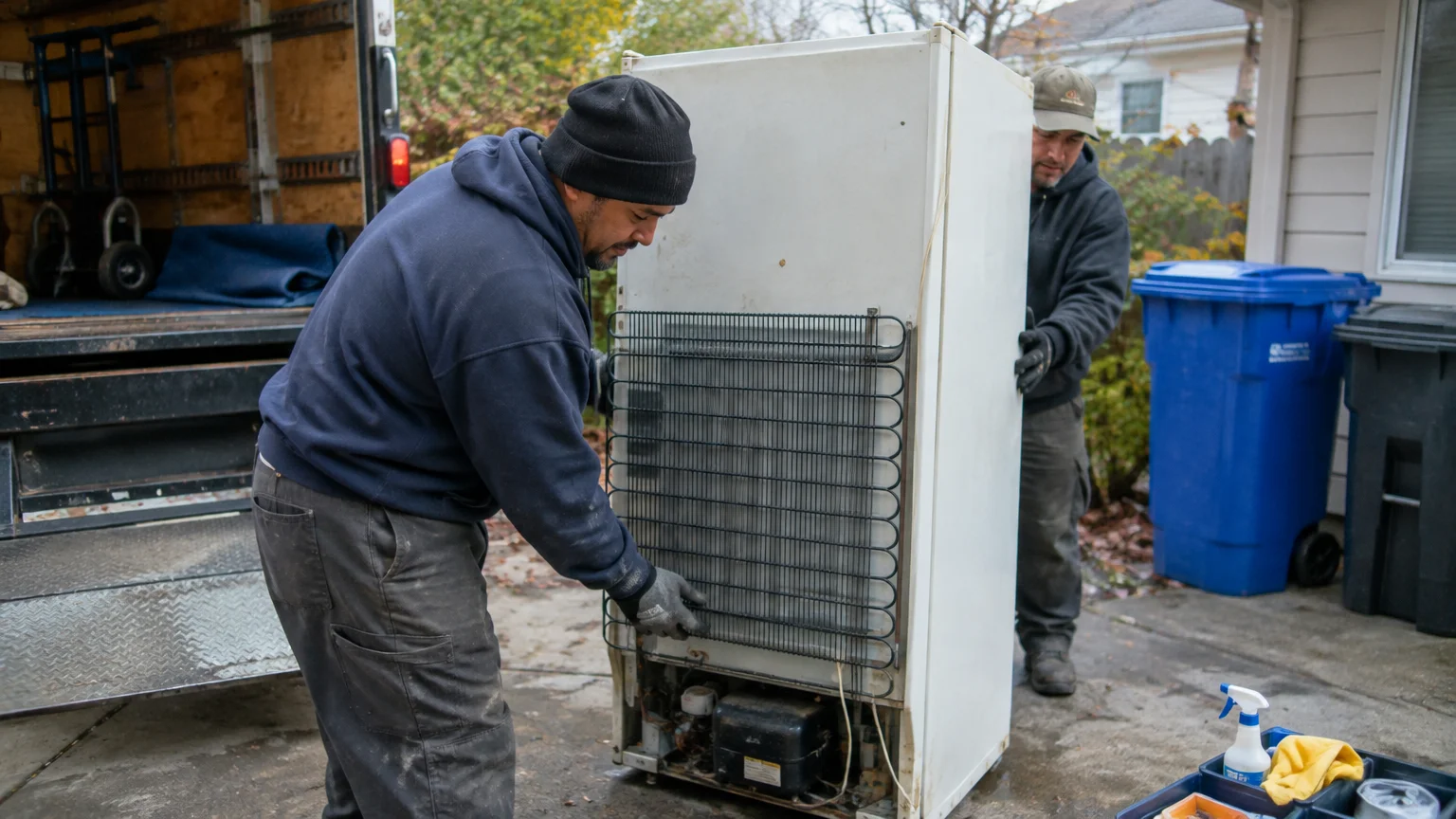
Refrigerators, freezers, ice makers, and similar cooling units are large appliances. They have compressors and sealed cooling systems. Older units may contain refrigerant that needs careful recovery before recycling or disposal.
A refrigerator can be hard to move because it is tall, deep, and heavy. Keep the doors closed while moving it. Remove shelves, drawers, and loose parts before the unit leaves the home. This helps protect walls, floors, and the appliance.
Freezers also count as large appliances, even when they are smaller than refrigerators. Chest freezers can be hard to carry through narrow doors. Do not cut cooling lines, remove compressors, or release gas. Trained workers and approved facilities should handle those tasks.
Washers, Dryers, Stoves, and Dishwashers
Washers, dryers, ranges, ovens, and dishwashers are also large appliances. Washers can hold water and have heavy parts inside. Dryers may connect to power or gas. Stoves and ovens can contain glass, wires, heating parts, and gas lines.
Dishwashers are often built under a counter. Their water, drain, and power connections may need safe removal first. A built-in appliance may take more planning than a freestanding unit.
Other items may qualify as large appliances. These include trash compactors, large dehumidifiers, commercial-style cooking units, and some window air conditioners. A removal team can review the item and explain what preparation it needs.
Which Appliances Can a Junk Removal Service Pick Up?
A junk removal service can often collect common household appliances. Acceptance depends on the item, its condition, its location, and local rules. Describe the appliance clearly when setting up service.
Common Household Appliances Accepted for Removal
Common items include refrigerators, freezers, washers, dryers, stoves, ovens, ranges, and dishwashers. Some services also take microwaves, compact refrigerators, water heaters, and dehumidifiers. Large appliance removal may cover one item or several appliances from one property.
The appliance does not always need to work. Old, broken, stained, or outdated units may still contain useful metal and parts. A team may sort those materials before taking the rest to the right facility.
Homeowners, landlords, businesses, and property managers may all need this service. A rental cleanout may include a broken washer. A kitchen update may leave an old stove behind. An office, restaurant, or apartment building may have larger equipment that needs a separate review.
Oversized, Built-In, and Commercial-Style Appliances
Oversized and built-in appliances often need extra planning. A commercial-style refrigerator may be wider and heavier than a home model. A built-in oven may be fixed inside cabinets. A stacked washer and dryer may need separation before removal.
Mention stairs, tight halls, gates, elevators, and low doors. These details help the service plan safe movement. Photos can also help when an item is unusually large or hard to reach.
Some appliances need special handling and may not be accepted by every provider. This may include units with damaged cooling lines, unknown chemicals, heavy contamination, or unsafe gas connections. A careful service explains these limits before the appointment.
How Should You Prepare a Large Appliance for Removal?
Preparation makes large appliance removal safer and easier. Remove food, clothing, dishes, water, shelves, and loose parts. A qualified person should handle gas, hardwired power, or plumbing connections.
Disconnecting Utilities and Emptying the Appliance
Unplug a simple appliance only when the plug is easy to reach and safe. Do not pull on a cord, cut wires, or open a gas line. A licensed worker may need to disconnect gas appliances or hardwired units.
Empty refrigerators and freezers completely. Let wet appliances drain before moving them. Remove detergent, trays, racks, shelves, and loose items. Clean spills so the path does not become slippery.
Secure a refrigerator door for movement, but do not seal it shut during long storage. If the unit stays in place, leave the door slightly open after cleaning. The removal team can explain safe short-term steps.
Checking Access, Measurements, and Property Protection
Measure the appliance and compare it with doors, halls, stairs, and gates. Check for sharp turns and low ceilings. Clear rugs, toys, boxes, and other trip hazards from the path.
Protect floors and walls when needed. A removal team may use blankets, straps, dollies, ramps, and other tools. Keep children and pets away from the work area during movement.
Do not drag a heavy appliance across the floor. Do not tip a refrigerator carelessly or carry a washer down stairs alone. Emptying the unit and clearing a safe path are tasks many owners can do themselves. Utility work and heavy lifting may need professional help.
How Are Large Appliances Disposed Of or Recycled?
Large appliances are sorted by their materials and condition. Working items may go to a donation or resale group. Broken units may go to an appliance recycler, metal processor, transfer station, or other approved facility.
Appliance Recycling and Material Recovery
Appliance recycling means taking an old machine apart to recover useful materials. Steel, aluminum, copper, glass, plastic, and wires may have another use. Motors and other parts may also be separated when safe.
Cooling appliances need extra care because sealed systems may contain refrigerant, oil, or other controlled materials. A qualified facility can recover these materials before processing the metal. Never puncture a cooling line or remove a compressor without proper training.
Recycling routes differ across the country. Local rules may depend on the city, county, state, appliance type, and facility. Puyallup WA Junk Removal can help Puyallup property owners understand the next step for common household units.
Donation, Reuse, and Responsible Disposal Options
An appliance in good working order may be useful to another person. Donation groups, reuse centers, stores, or community programs may accept certain items. Acceptance often depends on age, condition, safety, cleanliness, and transport needs.
Broken appliances usually need another route. A removal service may sort them before delivery to a recycling or disposal facility. This keeps bulky machines away from places that cannot safely accept them.
Do not leave appliances beside a road, in an empty lot, or near a dumpster without checking local rules. Illegal dumping can damage property and create safety risks. Responsible removal sends each item toward a suitable destination.
Are There Special Disposal Rules for Refrigerators and Freezers?
Yes. Refrigerators and freezers need special handling because their cooling systems may contain refrigerant. Keep the system sealed until a trained worker or approved facility handles it. Do not release refrigerant or place a full cooling unit in ordinary trash.
Refrigerants, Compressors, and Environmental Requirements
Refrigerant is a chemical that moves heat through a cooling system. It travels through sealed lines, a compressor, and other parts. Older and newer units may use different refrigerants, so the model label can matter.
The U.S. Environmental Protection Agency explains refrigerant recovery requirements for workers and businesses that service or dispose of covered equipment. Local facilities may also have their own rules.
A homeowner can empty and clean the unit. Do not cut lines, remove the compressor, or drain oil. If the unit leaks, keep people away and tell the removal service before the appointment.
Why Refrigerators Need Different Handling
A refrigerator is more than a large metal cabinet. It may contain refrigerant, insulation, wires, glass shelves, plastic parts, and a compressor. Safe removal protects workers, the property, and the environment.
Freezers may have the same concerns. A chest freezer can be hard to lift because its weight sits low and its shape is wide. A service may need a clear path and special moving tools.
Tell the provider if the appliance still has its cooling system. Also mention damage, leaks, chemicals, or flood exposure. Clear details help the provider choose a safe disposal route.
What Affects Large Appliance Removal Planning?
Planning depends on the appliance, the property, and the disposal route. Share the number of items, their size, their condition, and their location. The final service details are confirmed after the provider reviews the job.
Number, Size, Weight, and Type of Appliance
One small dishwasher is easier to plan than several full-size appliances. A wide refrigerator, stacked laundry unit, or commercial range may need more workers and tools. A damaged appliance may need careful handling because of sharp edges or loose parts.
The item type affects the next step. Refrigerators and freezers may need refrigerant handling. Gas ranges may need safe utility disconnection. Washers may hold water. Dishwashers may remain attached to plumbing or cabinets.
Help the service by sharing clear descriptions and photos. Explain whether the appliance is inside, outside, upstairs, in a garage, or behind a gate. This helps the team plan the visit without guessing.
Access, Labor, Transportation, and Disposal Requirements
Access is a major part of removal planning. Stairs, narrow doors, long walks, uneven ground, and elevators can change how the item moves. Property protection also matters when the path crosses finished rooms.
Transportation and disposal needs depend on the appliance. Some facilities accept mixed metal. Others require cooling units, gas appliances, or electronic parts to arrive separately. A responsible provider checks the route before leaving the property.
Large appliances need more handling than small curbside items. They also need careful disposal. Ask what preparation is needed and which items the service can accept. The provider confirms the final job details after reviewing the property.
When Should You Hire Professional Large Appliance Removal?
A professional is a good choice when an appliance is heavy, awkward, connected, or hard to reach. Homeowners do not need a professional for simple cleaning, emptying, or clearing a safe path. They should get help when moving the item could cause injury or damage.
Signs a Pickup Is Safer Than DIY Removal
Professional help is often safer when:
- The appliance must travel down stairs or through a tight doorway.
- The item is too heavy for the people available to move it safely.
- The unit connects to gas, plumbing, or hardwired electricity.
- The refrigerator or freezer may still contain refrigerant.
- The appliance has sharp damage, broken glass, or unstable parts.
- The owner lacks a dolly, straps, ramp, or moving blankets.
A homeowner should not risk a back injury to move an unwanted appliance. The same applies to cutting pipes, wires, or cooling lines. Simple preparation is helpful, but unsafe disconnection and lifting should be left to qualified workers.
What to Expect From a Responsible Removal Service
A responsible service asks useful questions before pickup. It confirms the appliance type, location, access route, condition, and utility status. It also explains which items may need another provider or facility.
The team should protect the property while moving the appliance. It should avoid dumping and follow suitable recycling or disposal routes. The owner should receive clear instructions about preparation and the next steps.
Puyallup WA Junk Removal helps property owners understand large appliance removal needs. The team can review the item and explain the safest way to prepare it.
Frequently Asked Questions
Can an old refrigerator go in a dumpster?
An old refrigerator should not go into a regular dumpster unless the provider and local facility allow it. Refrigerators may contain refrigerant and other parts that need special handling. A qualified appliance removal service can help send the unit to an approved facility.
Who takes old freezers?
Junk removal companies, appliance recyclers, transfer stations, and some retailers may take old freezers. Rules vary by location and condition. Explain whether the freezer is empty, damaged, leaking, upstairs, or still connected before arranging pickup.
Can a homeowner remove a washer or dryer alone?
A homeowner may empty a washer or dryer and clear the path. Moving the unit alone is often unsafe because it is heavy and awkward. Gas dryers, hardwired units, stairs, and tight spaces call for qualified help and proper tools.
Are large appliances recycled after pickup?
Many large appliances go through reuse, recycling, or approved disposal channels. Metal, wires, plastic, glass, and selected parts may be recovered. Refrigerators and freezers need extra care because their cooling systems may contain refrigerant.
How should a dishwasher be prepared for removal?
Empty and clean the dishwasher, then remove dishes and loose parts. Water and power connections may need safe disconnection before removal. Since many dishwashers sit under counters, a qualified worker may need to handle plumbing, wires, cabinet attachments, or tight access.
Key Takeaways
- Large appliances include refrigerators, freezers, washers, dryers, stoves, ovens, and dishwashers.
- Owners can empty appliances and clear paths, but utility work may need qualified help.
- Refrigerators and freezers need special handling because they may contain refrigerant.
- Reuse, recycling, and disposal routes depend on the appliance and local rules.
- Careful planning protects people, floors, walls, and the environment.
Conclusion
Large appliance removal means more than carrying a heavy machine outside. The appliance may have plumbing, gas, wires, refrigerant, glass, or sharp metal. Preparation helps, but safe lifting, transport, and disposal may need proper tools and experience.
Homeowners, landlords, businesses, and property managers should identify the appliance first. Then explain its condition, location, and connections. Puyallup WA Junk Removal serves Puyallup and can help plan a responsible next step for unwanted appliances.
Contact us today to discuss your appliance pickup needs.