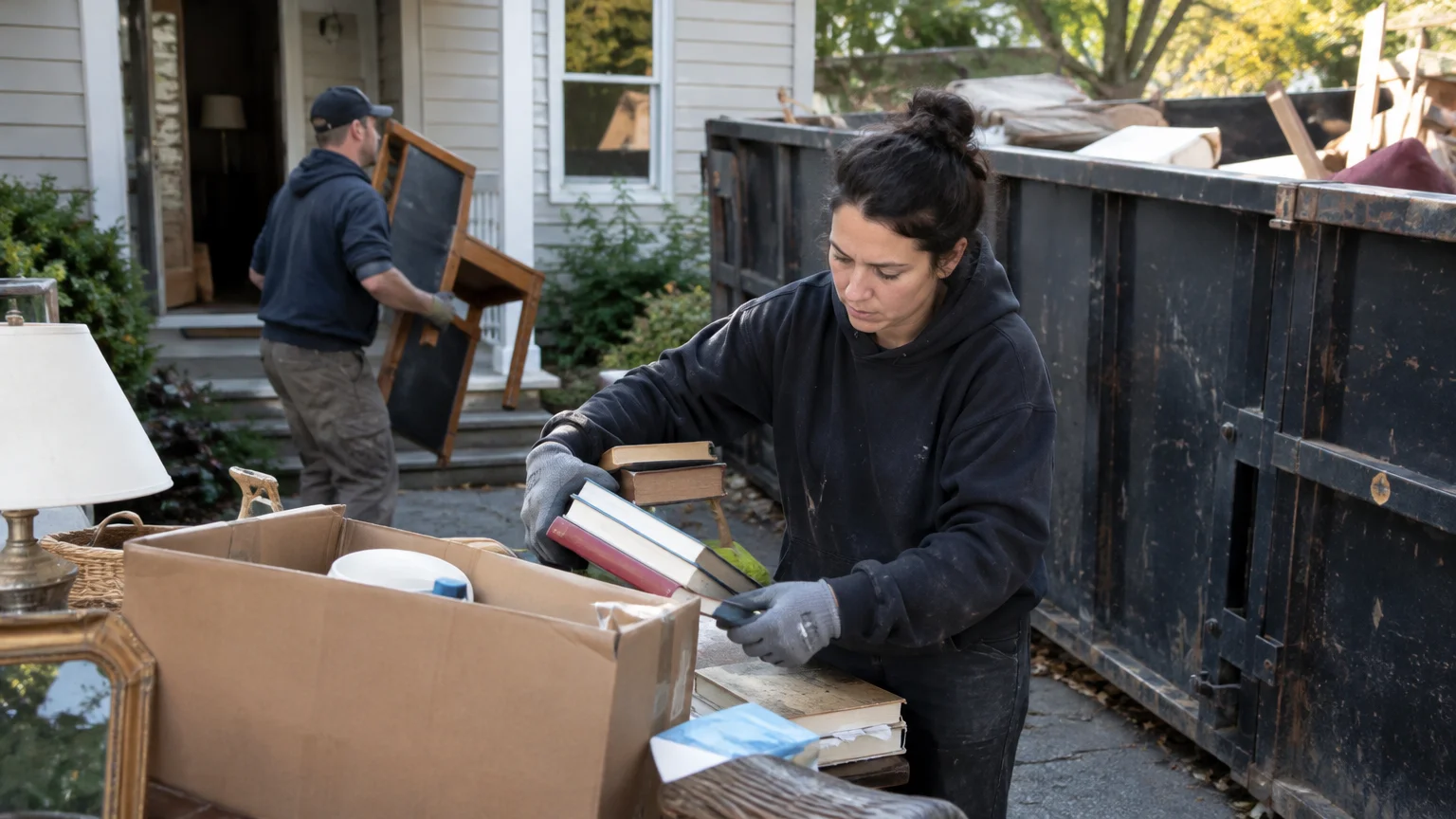
Estate cleanout vs dumpster rental depends on who will do the work, how soon the property must be ready, and what the home contains. A cleanout crew sorts, lifts, loads, hauls, and disposes of items. A dumpster gives you a container, but you handle the labor and most sorting yourself.
Table of Contents
- What is the difference between an estate cleanout and dumpster rental?
- When does an estate cleanout service make more sense?
- When is a dumpster rental a practical option for an estate?
- Which option is faster for preparing an inherited home?
- How do labor and responsibility compare between the two options?
- How should you sort belongings before clearing an estate?
- What happens to furniture, appliances, and household debris?
- How much does an estate cleanout compare with dumpster rental?
- What should you consider before choosing either option?
- Which estate cleanout option is the better fit for your property?
- Frequently Asked Questions
What is the difference between an estate cleanout and dumpster rental?
An estate cleanout service includes the labor needed to clear a home. A crew may sort items, carry heavy belongings, load them, haul them away, and sweep the space. A dumpster rental only provides a container. The owner or helpers must decide what goes inside and move each item safely.
This difference matters after a death, move, foreclosure, or major property change. An estate may contain furniture, clothing, dishes, books, papers, appliances, yard waste, and personal items. Some things may be donated or recycled. Other items may need special handling. A dumpster does not sort belongings or choose where they should go.
A cleanout service is hands-on. It may help when family members live far away, have little time, or cannot lift heavy items. It can also help when the property must be ready for an agent, buyer, landlord, or new resident.
A dumpster may work well for a simple removal job. The home should already be sorted, the items should be easy to move, and strong helpers should be ready. You also need a safe place for the container and enough time to load it.
The better choice depends on the home, schedule, and people available. Puyallup WA Junk Removal helps Puyallup property owners think through the work before choosing a plan.
When does an estate cleanout service make more sense?
An estate cleanout service makes sense when the property needs sorting, heavy lifting, and removal from several rooms. It is often useful for inherited homes, estates after a loss, foreclosure properties, and homes that have been closed for a long time. The service can reduce the tasks placed on family members or the executor.
An executor is the person named to manage an estate. That person may need to protect papers, arrange donations, prepare the home for sale, and keep heirs informed. Handling every box and piece of furniture alone can make the work slow and stressful.
A full-service crew may be a good fit when:
- Furniture, appliances, boxes, and debris fill many rooms.
- Family members live outside Puyallup or cannot visit often.
- The property must be cleared before a listing, closing, lease, or inspection.
- Heavy items need more than one person to move safely.
- The family needs help separating donations from household waste.
- The home has stairs, narrow halls, limited access, or a long carry path.
A crew does not replace the executor's choices. Family members still decide what to keep, sell, donate, or discard. The crew handles the physical work after those choices are clear.
This service may also help when emotions make the job hard. Sorting a loved one's home takes time and care. A respectful team can follow instructions and avoid rushing through personal belongings. The goal is a clean, usable property while important items stay under the family's control.
When is a dumpster rental a practical option for an estate?
A dumpster rental can work when the estate is already sorted and several people can load the container. It may suit a property with a clear driveway, simple access, and mostly ordinary household debris. The owner must still check local rules and confirm which materials the provider accepts.
A dumpster is less hands-on than a cleanout service. It does not carry items from inside the home. It does not separate donations, protect keepsakes, or choose the best disposal path for appliances and other large goods. Those tasks stay with the people managing the estate.
Before a container arrives, arrange a safe placement area. The surface should be stable. The container should not block emergency access, shared drives, sidewalks, or neighboring property. Some communities or property managers may require permission when a container sits near a street.
You should also make a loading plan. Heavy furniture should not be placed where it could fall on someone. Sharp objects need care. Items that may contain chemicals, refrigerants, batteries, or other regulated materials should stay out unless the provider clearly allows them.
A dumpster may suit a short project with clear limits. It can be harder when the home has many rooms of mixed belongings. In that case, carrying, sorting, loading, and cleaning may take more time than expected.
Which option is faster for preparing an inherited home?
A full-service estate cleanout is often faster when the home has many belongings or a firm deadline. A crew can work through rooms, carry items, load vehicles, and manage disposal during a planned visit. A dumpster project may take longer because the owner must gather helpers and complete every step.
Speed depends on more than the home's size. Stairs, narrow doors, parking, item weight, and the amount of sorting all affect the schedule. A small home may still take a long time when every box needs review.
A dumpster project has several stages. The owner must decide what to remove, gather helpers, move items, load the container, and clean the rooms. If helpers cancel or weather changes, the work may slow down. The rental period may also limit the time available.
A cleanout crew can help when an agent, buyer, landlord, or attorney needs the property ready soon. The crew focuses on physical work while the executor handles records, family updates, and legal duties. Clear instructions before work begins can prevent delays.
Urgent does not mean careless. Remove important papers, photographs, jewelry, family records, and other keepsakes before general loading starts. A short written plan helps everyone know what stays, what leaves, and who makes final choices.
How do labor and responsibility compare between the two options?
With a dumpster, the homeowner, executor, or helpers handle most of the labor. They move items from rooms, stairs, attics, basements, and garages. They also load the container, keep items below its fill line, and clean the property afterward.
With a cleanout crew, the team can handle much of the physical work. Depending on the agreed service, this may include carrying, loading, hauling, sorting support, and a final sweep. The owner still controls personal decisions and should identify anything that must stay.
This difference matters for older adults and people with injuries. Furniture, appliances, and packed boxes can be awkward and heavy. Do not lift an item alone when the path is narrow or the weight is unclear. Light sorting and basic cleaning may be safe for a homeowner, but heavy removal is better left to trained workers.
A clear work plan should list the rooms, items, access points, fragile belongings, and materials needing separate handling. It should also explain whether donations, recycling, or special disposal are part of the job. Written notes can reduce confusion among heirs and helpers.
Puyallup WA Junk Removal can help property owners think through the work before choosing a removal plan. A local team may know common access concerns in Puyallup, but the owner should share all known problems before scheduling.
How should you sort belongings before clearing an estate?
Sorting should happen before general removal begins. First, protect personal items, legal papers, valuables, and anything family members may want to keep. Then separate donations, recycling, household waste, and items needing special handling.
A simple process can make a large home easier to manage:
- Gather heirs or decision-makers and agree on who can approve removal.
- Set aside wills, deeds, tax papers, account records, photographs, and medical documents.
- Mark items to keep, donate, sell, recycle, remove, or review later.
- Check drawers, closets, cabinets, garages, sheds, attics, and vehicles.
- Photograph rooms and valuable items before moving anything.
- Complete a final walk-through before loading begins.
Labels should be clear and easy to see. Written words are better than color alone. Family members should have time to review uncertain items. Rushing can lead to the loss of objects with personal or legal value.
A house cleanout sale may help with selected furniture and household goods. It is not a complete removal plan. Items that do not sell still need another destination. A donation center may accept usable goods, but each group has its own rules and pickup limits.
Homeowners can safely sort light items and basic papers themselves. Do not open unknown containers or move unsafe materials. A professional should handle heavy, unstable, or possibly hazardous items.
What happens to furniture, appliances, and household debris?
Furniture and appliances need a removal plan because they are large, heavy, and hard to carry. A crew may remove sofas, beds, tables, cabinets, washers, dryers, refrigerators, and other bulky items if the service accepts them. The final destination depends on condition, material, and local rules.
Usable furniture may go to a donation group or resale channel. Metal appliances may be sorted for recycling. Broken pieces may follow ordinary disposal rules. A refrigerator, freezer, air conditioner, or similar item with refrigerant may need special handling. Batteries, paint, fuel, cleaners, and other chemicals should not go into a dumpster unless the provider confirms acceptance.
Old mattresses also need planning. Rules can vary by facility and service provider. The same is true for televisions, computers, tires, propane containers, and fluorescent bulbs. Ask before placing these items in a container or truck.
Yard debris may have separate drop-off rules. If you are looking where to drop off tree branches near Puyallup, check with the local facility or ask the removal provider about accepted materials.
A hot tub is another large-item example. Removing one may involve draining it, disconnecting utilities, cutting the shell, and moving heavy pieces through a safe path. Do not start until power and water connections are handled safely. A removal crew can explain what preparation is needed.
How much does an estate cleanout compare with dumpster rental?
The final cost of an estate cleanout or dumpster rental depends on the work involved, not just the number of rooms. Main factors include debris volume, labor, access, loading needs, disposal rules, rental time, and material types. The final cost is confirmed on a quote for the property.
A dumpster may seem simpler when helpers are ready and the estate has ordinary debris. Still, the owner must account for time and effort spent sorting, carrying, loading, and cleaning. A container kept longer may also affect the quote. Extra handling may be needed for items that cannot go inside.
A full-service cleanout includes more labor. It may fit better when the home has heavy furniture, many rooms, stairs, long carry distances, or a short deadline. A mixed load also needs more planning than a pile of similar debris.
Access can change either comparison. A container may be hard to place at a home with a narrow drive. A crew may need more time when trucks cannot park near the door. A clean, sorted home is different from a packed home with blocked paths.
The best question is not simply which choice seems cheaper. Ask which option matches the available labor, time, safety needs, and disposal plan. Request a clear quote and ask what work, materials, and final cleanup it includes.
What should you consider before choosing either option?
The right choice becomes clearer when you review the property and the people available to help. A short checklist can prevent a rushed decision. It should cover access, time, labor, item types, family needs, and the final condition required.
Before choosing, consider:
- Who has legal authority to decide what leaves the property?
- Which rooms, outbuildings, vehicles, and yard areas need clearing?
- Are there stairs, narrow halls, locked gates, or long paths to the truck?
- Can enough helpers work safely during the available time?
- Must the property be ready for sale, rent, inspection, or closing?
- Are there appliances, chemicals, batteries, mattresses, or electronics to handle?
- Which items must be donated, recycled, sold, stored, or kept by heirs?
The executor may also need to work with an attorney, real estate agent, landlord, property manager, or insurance company. Each person may have different needs. Written approval can help when several heirs share responsibility.
A dumpster may fit a simple, planned project. A full-service cleanout may fit a mixed project with little available labor. Some owners may use both options at different stages, but disposal rules should be clear before work begins.
Check the home for safety concerns. A blocked walkway, unstable stack, mold concern, pest issue, or damaged floor can change the plan. Homeowners can handle light cleaning and sorting, but they should not enter unsafe areas or move unstable loads without proper help.
Which estate cleanout option is the better fit for your property?
A dumpster rental is usually a better fit when the home is sorted, helpers are ready, access is simple, and the owner can manage loading. An estate cleanout service is usually better when the property needs hands-on labor, careful sorting, bulky-item removal, or a faster turnaround.
The emotional side matters too. Clearing an inherited home can be hard for families. A respectful crew can help with physical work while relatives focus on decisions and meaningful belongings. The service should follow family instructions and treat the property with care.
Key takeaways
- A dumpster provides space, but the owner manages the labor.
- A cleanout crew can sort, carry, load, haul, and sweep.
- Important papers and keepsakes should be protected before loading.
- Appliances, mattresses, chemicals, and electronics may need special rules.
- The best choice depends on time, access, labor, property condition, and disposal needs.
For a hands-off project, Puyallup WA Junk Removal can help property owners plan an estate cleanout that fits the home's condition and deadline. Contact us to discuss the property and arrange the next step.
Frequently Asked Questions
What is a cleanout service?
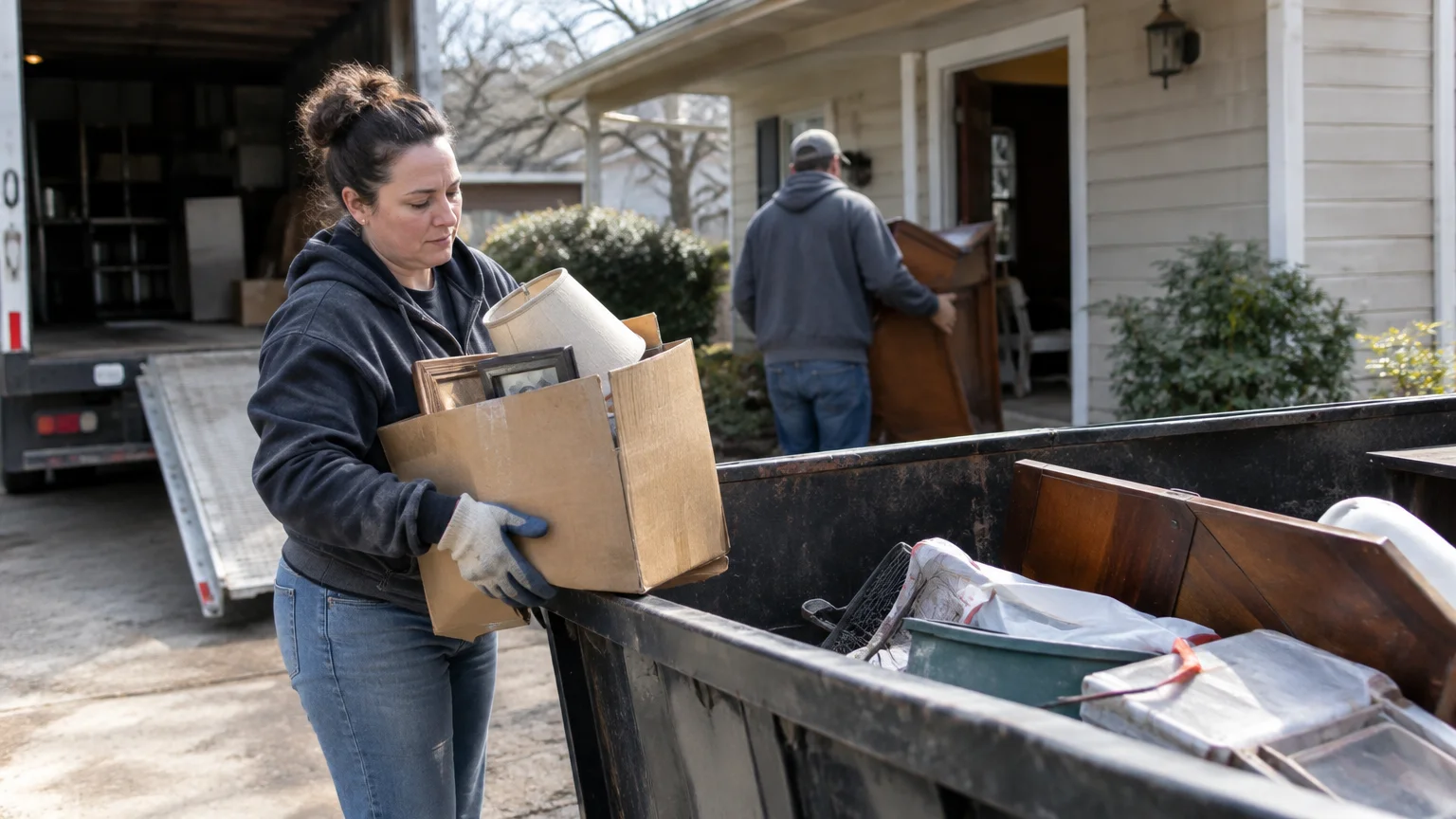
A cleanout service removes unwanted items from a property. The work may include sorting support, carrying, loading, hauling, disposal, and sweeping. It can help with inherited homes, foreclosures, moves, hoarding situations, and whole house cleanouts. The owner still decides which personal items must stay.
Can I put a mattress in a dumpster?
That depends on the dumpster provider and local disposal rules. Some providers accept mattresses, while others require separate handling. Ask before placing one inside. A cleanout company may also explain the available removal route. Never leave a mattress beside a container without clear permission.
What happens to old appliances?
Old appliances may be donated, recycled, or disposed of based on their condition and materials. Refrigerators, freezers, and air conditioners may need special handling because of refrigerant. Share an appliance list before removal. Do not disconnect electrical, gas, or water lines unless the work is safe.
How can someone get rid of an old hot tub?
An old hot tub may need draining, utility disconnection, cutting, and careful removal. Its size and location affect the safe plan. Do not cut electrical lines or move heavy sections alone. A removal crew can review the access path and explain what preparation is needed.
How should a family choose between estate cleanout companies?
Families should compare the work included, accepted materials, schedule, access plan, disposal process, and cleanup details. Ask who handles sorting, heavy lifting, appliances, donations, and final sweeping. A clear quote should explain the planned work. The company should communicate respectfully with the executor and heirs.
If you are unsure what the property needs, review the rooms, access points, item types, and deadline before choosing a removal plan. This can help prevent delays and unwanted work during the estate cleanout.
If you are not sure what you are dealing with, it is worth having someone look at it before it turns into a bigger job. Get in touch with Puyallup WA Junk Removal today and we will tell you where you stand.