Professional large appliance removal is useful when an appliance is heavy, stuck, unsafe to move, or hard to dispose of. It can help with refrigerators, washers, dryers, stoves, and dishwashers. Puyallup WA Junk Removal helps property owners plan a safer pickup and follow proper disposal steps.
Moving a large appliance may seem simple, but many jobs have hidden risks. A refrigerator may contain refrigerant. A washer may hold water. A built-in stove may connect to gas or power lines. The safest plan depends on the appliance, the property, and the removal route.
Table of Contents
- When Is a Large Appliance Too Heavy or Awkward to Move Safely?
- When Should You Hire Professionals for Refrigerator Removal?
- Why Is Professional Removal Worth It When You Have Multiple Appliances?
- When Does Appliance Removal Require Special Disposal or Recycling?
- Should You Hire Help When an Appliance Is Stuck or Built In?
- When Is Professional Appliance Removal Important for a Property Turnover?
- How Can You Decide Whether Professional Large Appliance Removal Is Worth It?
- Key Takeaways
- Frequently Asked Questions
- Conclusion
When Is a Large Appliance Too Heavy or Awkward to Move Safely?
A large appliance may be too risky to move when one person cannot control its weight or shape. Refrigerators, washers, dryers, and stoves can shift without warning. A safe move needs enough space, proper tools, and a clear path to the vehicle.
How appliance weight and design create lifting risks
Large appliances can be hard to grip. Smooth sides give little hand support. Doors, cords, hoses, and loose parts can catch on walls. A tall refrigerator may tip at a doorway. A washer may hold water and become harder to control.
Homeowners can handle simple checks themselves. They can remove food, shelves, racks, and loose items. They can read the owner’s guide and clear the path. They should not strain to lift an appliance that needs more than one capable person.
Why stairs, narrow doorways, and uneven surfaces matter
Stairs make the job harder because the appliance must stay balanced at every step. Narrow doors may need careful turns. Wet floors, soft ground, and uneven driveways can make a dolly slip. A fall can hurt someone or damage floors, trim, cabinets, or the appliance.
Professional large appliance removal is often a good choice when the route has stairs, tight corners, long halls, or uneven ground. A crew can check the path before moving anything. That plan helps prevent rushed lifting and damage to the home.
When Should You Hire Professionals for Refrigerator Removal?
Professional help makes sense when a refrigerator is heavy, leaking, connected to a water line, or ready for disposal. Refrigerators need more care than many household items. They contain sealed cooling parts and may contain refrigerant.
What makes refrigerators different from other appliances
A refrigerator may have glass shelves, sharp edges, a water filter, an ice maker, and a compressor. Before moving it, remove food and loose shelves. A qualified person should shut off the water supply when the connection is hard to reach or unclear.
A homeowner can wipe the inside, unplug the unit, and secure the doors for a short move. The refrigerator should not be dragged across the floor. Keep it upright when possible. If it must be tilted, follow the maker’s instructions before plugging it in again.
How refrigerant and compressor parts affect disposal
Refrigerant is a substance used in cooling systems. It may need proper recovery before the appliance can be processed. The compressor, coils, wiring, metal shell, and plastic parts may also need separate handling.
For this reason, an old refrigerator should not go into regular household trash without checking local rules. Some facilities have special steps for cooling appliances. Puyallup WA Junk Removal can help Puyallup homeowners arrange refrigerator removal without asking them to handle sealed cooling parts.
Why Is Professional Removal Worth It When You Have Multiple Appliances?
Professional removal can help when a property has several large appliances. Moving a refrigerator, washer, dryer, stove, and dishwasher one at a time may require many trips. It also takes planning, tools, and space. One planned pickup can make the job easier.
Coordinating refrigerator, washer, dryer, stove, and dishwasher removal
Each appliance may need a different first step. A washer may need its hoses drained. A dryer may need its vent disconnected. A dishwasher may connect to water, power, or a drain. A stove may connect to gas or electricity and should never be pulled by force.
Homeowners can remove loose items and clean surfaces. Difficult utility connections should be left to a qualified person. After the appliances are safe to move, a removal crew can load them in a planned order. This keeps halls, doors, and loading areas clear.
How one scheduled pickup can simplify a property cleanout
Several appliances may appear during a kitchen update, rental turnover, estate cleanout, or garage project. They can block work areas and use valuable storage space. A planned pickup lets the owner focus on repairs, painting, cleaning, or listing work.
A cleanout service removes unwanted items from a home or property and takes them to the proper next place. Large appliances may be part of that work, along with other approved household items. Puyallup WA Junk Removal can help customers identify which appliances are ready for removal before the appointment.
When Does Appliance Removal Require Special Disposal or Recycling?
Appliance removal may need special handling when an item contains refrigerant, oil, batteries, electronic parts, or mixed materials. The correct process depends on the appliance and local rules. Recycling may be possible, but the item must reach a facility that can process it.
Which appliance materials and parts may be recovered
Large appliances often contain steel, aluminum, copper, glass, plastic, wiring, and electronic parts. Some materials can be separated for recycling. Reuse may also be possible when an appliance is clean, complete, and working.
Do not assume every part belongs in a curbside recycling bin. These programs often accept only certain household materials. A large refrigerator or dishwasher usually needs a special drop-off or pickup plan. A removal provider can help sort the item by type and condition.
Why local disposal rules can affect the removal process
Rules may differ by city, county, facility, and appliance type. Some sites accept large appliances only during certain hours. Others may require proof that cooling equipment was handled correctly. Property owners should check local guidance before delivering an appliance themselves.
Professional large appliance removal can reduce this guesswork. The crew can review the item before loading it and follow the destination’s rules. Puyallup WA Junk Removal can help homeowners, landlords, and business owners prepare appliances for a suitable pickup route. Share any leaks, damage, or utility connections before removal.
Should You Hire Help When an Appliance Is Stuck or Built In?
Professional help is usually safer when an appliance is stuck, built in, or connected to utilities. Pulling too hard can damage cabinets, floors, walls, pipes, wires, or gas lines. A simple removal can become a repair problem when the unit is forced out.
Removing connected or tightly fitted appliances safely
Built-in dishwashers often sit under a countertop. Wall ovens may fit tightly inside cabinets. Cooktops can connect below the counter. Refrigerators may have water lines or custom trim. These items need careful checks before anyone tries to move them.
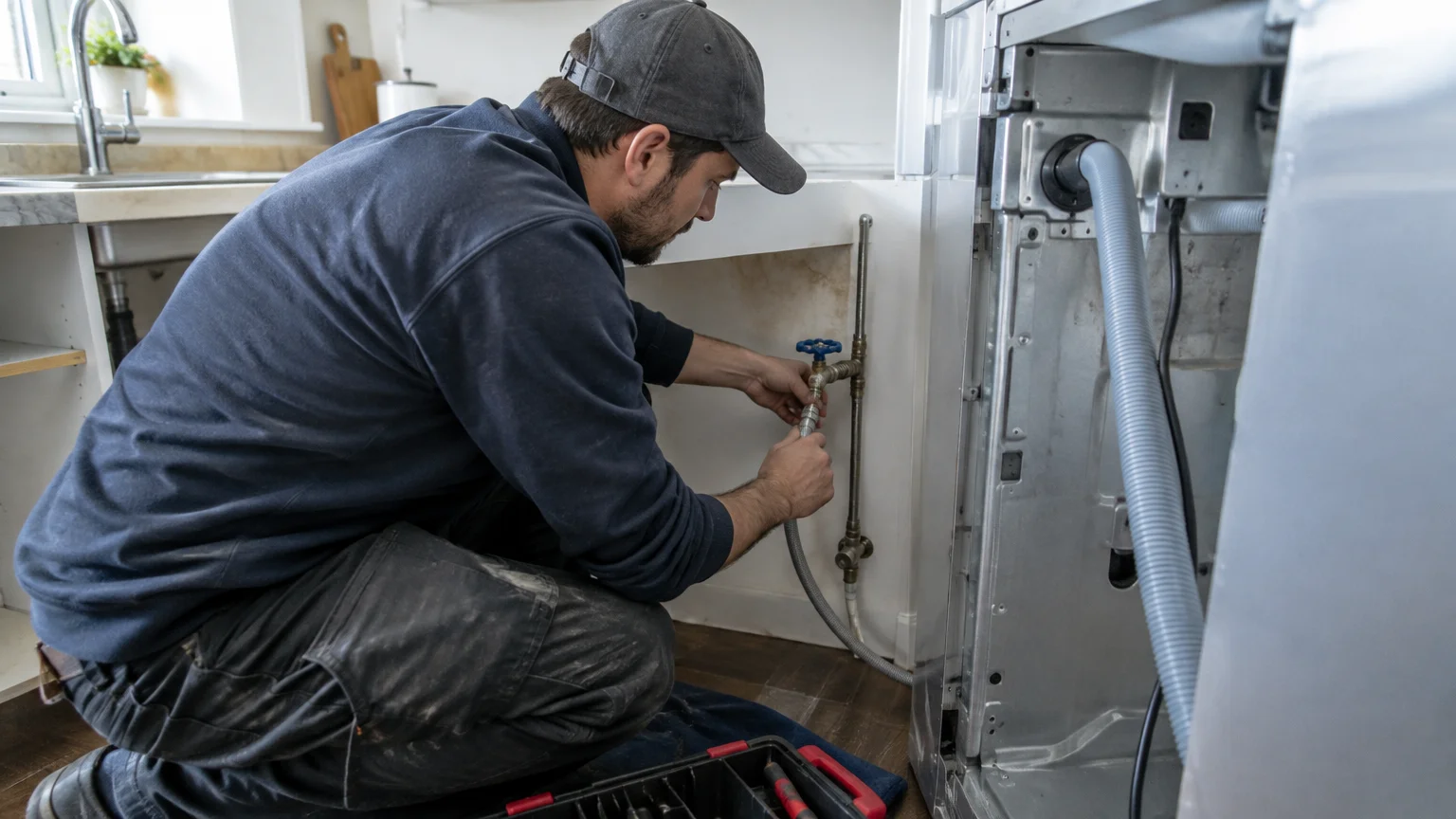
A homeowner can clear nearby items, open cabinet doors, and find the owner’s manual. Do not disconnect a gas line or unfamiliar power connection without qualified help. Water should also be shut off before moving a connected appliance, using the proper shutoff point.
Preventing damage to floors, cabinets, walls, and utility lines
Appliance crews often use moving blankets, straps, boards, and appliance dollies. These tools help spread weight and protect finished surfaces. Measure the route before moving the appliance. Doors may come off the appliance, but only when safe and practical.
The safest plan may be for a qualified tradesperson to disconnect the appliance first. A removal team can then move it without pulling on pipes or wires. This two-step plan can help during kitchen work, rental repairs, and property cleanouts.
When Is Professional Appliance Removal Important for a Property Turnover?
Professional appliance removal matters during a property turnover when old units delay cleaning, repairs, inspections, or a new tenant’s move-in. It can also help owners prepare listings, remodels, and inherited properties with several unwanted appliances.
Preparing rentals, listings, renovations, and inherited properties
Landlords may find broken washers or dryers after a tenant leaves. Sellers may replace an old refrigerator before listing a home. Renovation teams may need a clear kitchen before changing cabinets or floors. Families handling an inherited property may find appliances too heavy to move alone.
Timing matters in each case. An appliance may block a work area or make the property look unfinished. Removing it early can help cleaners, contractors, and property managers reach the space. It also prevents the owner from storing a bulky unit while waiting for a disposal plan.
How removal supports a cleaner, more useful space
A clear space is easier to sweep, inspect, repair, and measure. It may reveal water damage behind a washer or wall damage behind a refrigerator. Early removal gives the owner time to fix floors or cabinets before the space is used again.
Puyallup WA Junk Removal helps property owners plan appliance pickup around project needs. Share the appliance type, location, access route, and known connections. Clear details help the crew prepare and avoid problems at the property.
How Can You Decide Whether Professional Large Appliance Removal Is Worth It?
Professional large appliance removal is worth considering when safety, access, timing, or disposal rules make a do-it-yourself move hard. A homeowner does not need help for every appliance. Simple cleaning and basic preparation may be safe, but lifting, disconnection, and disposal can need trained support.
Questions to ask before moving an appliance yourself
Before starting, ask:
- Can the appliance move without lifting beyond your safe ability?
- Is the path clear, level, dry, and wide enough?
- Does the appliance connect to gas, water, power, or a drain?
- Could it contain refrigerant, oil, batteries, or controlled parts?
- Is there a confirmed destination that accepts this appliance type?
If any safety answer is unclear, stopping is the better choice. A homeowner can remove loose contents and clear the area. Do not risk a back injury, damaged floor, or utility leak to avoid arranging help.
What to expect when arranging a local removal service
A local removal service will need basic details before pickup. Explain the appliance type, its location, access conditions, and whether it is built in or connected. Photos may help the team understand stairs, gates, tight parking, or narrow spaces.
The final service details should be confirmed before the appointment. The final cost depends on factors such as appliance size, access, condition, urgency, and disposal needs, so the final cost is confirmed on a quote. Puyallup WA Junk Removal can help Puyallup customers choose a practical removal plan.
Key Takeaways
- Heavy or awkward appliances can create injury and property risks.
- Refrigerators may need special handling because of refrigerant and cooling parts.
- Built-in appliances should be disconnected with care before removal.
- Several appliances are often easier to plan as one organized pickup.
- Local rules may affect appliance recycling and disposal.
Frequently Asked Questions
Is appliance removal available near me?
Stores, utilities, local programs, and removal services may offer appliance collection. Each has its own rules. Availability may depend on the appliance, location, and pickup time. Confirm the current requirements before making plans.
How can someone get rid of an old refrigerator?
Check whether a local facility, retailer program, or removal service accepts the refrigerator. Remove food and loose shelves first. Do not place it with regular trash unless local guidance allows it. Cooling parts may need special handling before recycling.
Can homeowners remove a washer and dryer themselves?
Homeowners can often clean the units and remove loose items themselves. Moving them is different. Water, vents, power, stairs, and narrow doors can create risks. If connections are unclear or the route is hard, professional help is safer than forcing the appliances through the home.
What happens to old appliances after pickup?
The next step depends on the appliance’s condition and materials. Some units may be reused. Others may be separated for metal, plastic, glass, or electronic recycling. Refrigerators and similar cooling appliances may need special processing. The final destination should follow local facility rules.
What should an owner tell a removal company?
Share the appliance type, size, location, condition, and access route. Mention stairs, narrow doors, gates, tight parking, and built-in fittings. Also mention water, gas, power, or refrigerant concerns. These details help the team plan the safest next step.
Conclusion
Large appliances are not always simple household items. Weight, access, utility connections, refrigerant, and disposal rules can affect the job. Homeowners may handle cleaning and basic preparation, but difficult lifting and special disposal need more care.
When a refrigerator, washer, dryer, stove, or dishwasher is unsafe to move alone, professional large appliance removal can make the project easier. Contact us to arrange appliance removal with Puyallup WA Junk Removal.