Business recycling solutions help warehouse teams sort useful materials from waste, keep work areas clear, and plan safe cleanouts. Start by checking what your local recycling provider accepts, then set up marked places for common materials. In Puyallup, a simple plan can help staff handle cardboard, metal, pallets, and bulky items with care.
Table of Contents
- What are business recycling solutions for warehouses?
- Why should warehouses create a recycling plan?
- How can a warehouse identify recyclable materials?
- How should businesses set up warehouse recycling areas?
- How can teams prepare shelving, equipment, and bulk debris?
- When should a warehouse use a commercial junk removal service?
- How can businesses maintain an effective recycling program?
- Frequently Asked Questions
What are business recycling solutions for warehouses?
Business recycling solutions are the steps a company uses to collect and sort materials for reuse or recycling. In a warehouse, this may include cardboard, clean metal, some plastics, and sound pallets. A clear plan also explains how staff should handle large items that do not fit regular recycling bins.
How recycling fits into warehouse cleanup
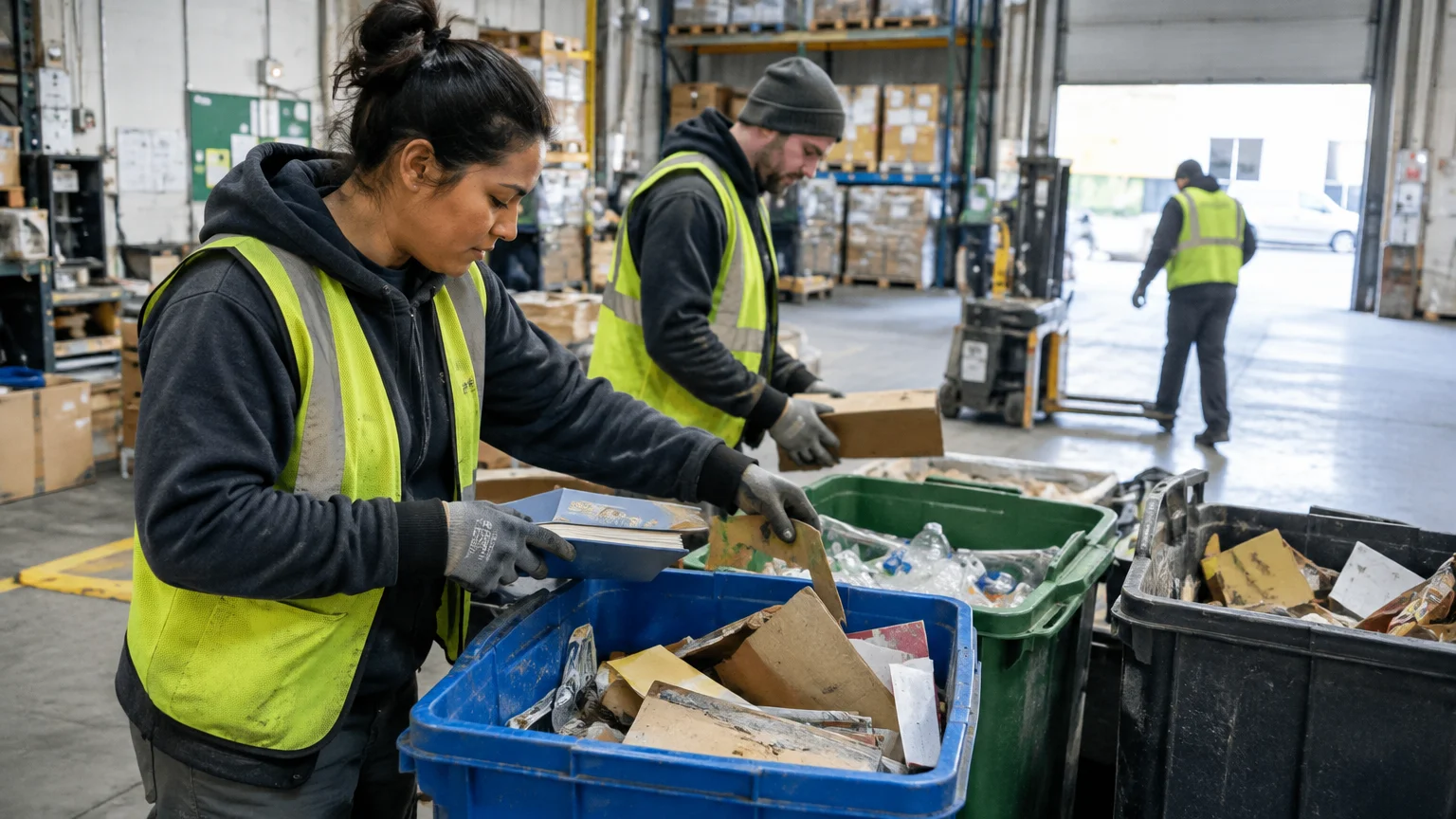
Warehouse cleanup can uncover many kinds of materials. These may include packing waste, old shelving, broken furniture, damaged equipment, and leftover stock. Sorting items before removal helps staff see what may be reused, what a local provider accepts, and what needs another route. It also keeps useful materials from becoming mixed with general debris.
The plan should fit the building and the work done there. A small storage room may need a marked cardboard area and a safe place for unwanted items. A large warehouse may need several collection points, clear paths, and a schedule for moving full containers. The main goal is to make the next step easy for everyone.
For warehouse owners in Puyallup, planning can make a cleanout easier to manage. Puyallup WA Junk Removal can help local businesses consider commercial junk removal when equipment, shelving, or mixed debris is too large for their usual process. The recycling plan should still guide what staff sort before a collection is set up.
Which materials can typically be recovered
Cardboard, clean scrap metal, some plastics, and reusable pallets may be accepted by recycling or reuse programs. Each provider may have different rules. Wet, dirty, mixed, or badly damaged items may not qualify, so check local rules before setting materials aside.
A recycling plan does not mean every item can be recycled. It gives staff a practical way to find options and keep likely materials separate. That makes cleanup easier to manage and gives workers a clear next step for each item.
Why should warehouses create a recycling plan?
A warehouse recycling plan gives staff one shared way to sort materials and keep work areas in order. It can reduce mixed piles, repeated handling, and confusion about what should stay, be reused, recycled, or removed. The plan works best when it fits the team’s normal tasks.
Reducing disposal and material-handling challenges
Without a plan, items may collect in aisles, beside loading areas, or near workstations. Staff may move the same pile more than once, and recyclable materials can get mixed with debris. A simple system shows where each material goes and who checks the collection area.
The plan can also help managers get ready for a large cleanout. Before work starts, they can mark items that need special care, clear access, and decide what must stay on site. This can reduce last-minute changes and help regular work continue.
For example, a business replacing old shelving can keep usable parts apart from bent or broken pieces. It can also separate cardboard packaging from metal parts and loose debris. These small steps help the team send each load to a suitable next place.
Supporting workplace organization and sustainability goals
A clear recycling area can make a warehouse cleaner and easier to move through. Staff are more likely to sort items well when containers are easy to find and labels use simple words. Managers can explain what the business hopes to recover and what should not go in each bin.
Recycling is one part of responsible warehouse cleanup. A business can first ask whether an item is still useful, can be fixed, or can be passed on for reuse. Items that are unsafe, broken, or not accepted by a local program may need another route.
A useful plan puts safety and clear paths first. Workers should not carry heavy loads farther than needed or stack items where they could fall. Puyallup WA Junk Removal works with businesses that need help planning the removal of unwanted warehouse items as part of a cleanout.
How can a warehouse identify recyclable materials?
A warehouse can identify recyclable materials by checking what each item is made of, whether it is clean and usable, and what local programs accept. Do not assume that every item with a familiar material label belongs in a recycling bin. When rules are not clear, ask the local provider or waste service.
Sorting cardboard, metals, plastics, and pallets
Start with common materials that are easy to spot. Keep clean, dry cardboard apart from general debris. Set aside metal parts only when they are safe to handle, and check which types of plastic a local program accepts. Keep pallets that may be reused apart from broken or unsafe ones.
- Cardboard: Keep it dry and free of food, plastic wrap, and other waste.
- Metal: Separate clean, safe pieces from mixed or sharp materials.
- Plastic: Check local rules instead of judging by appearance alone.
- Pallets: Keep sound pallets apart from damaged ones that may need removal.
- Equipment and furniture: Decide whether each item can be reused, fixed, recycled, or removed.
These groups are a starting point, not a full list. A warehouse may also have packing materials, old office furniture, shelving, and appliances. Some items have parts that need a separate route. Staff should not take equipment apart unless they are trained and the task is safe.
Checking local rules and material acceptance requirements
Recycling rules can differ between local programs and private providers. Before a cleanup, a manager should check which materials are accepted and how to prepare them. They should also ask whether items need to stay separate and what to do with dirty, mixed, or oversized materials.
This check can stop a pile from being marked recyclable when no local service will take it. It can also help staff avoid loading materials in a way that causes delays. Keep the instructions where workers can see them, and update them if the provider or program changes its rules.
How should businesses set up warehouse recycling areas?
Businesses should put recycling areas where staff can reach them safely without blocking work or vehicle paths. Each area needs clear labels, suitable containers, and enough room to sort materials. The layout should fit the warehouse’s daily movement, not only one cleanup project.
Choosing collection points and containers
When space allows, choose collection points near the tasks that create the materials. A packing area may need a place for clean cardboard. A maintenance area may need a separate container for approved scrap metal. Keep materials apart when the local program asks for separate loads.
Use plain labels and simple examples. A sign can say what belongs in a container and what must stay out. Avoid unclear labels that leave staff guessing. Managers should also check that containers are strong enough and suited to the items placed inside them.
The setup does not need to be complex. A small warehouse may need only a few marked collection points. A larger site may need a sorting area with separate zones. Staff should be able to look at the layout and understand it before they move materials.
Keeping traffic lanes and work areas clear
Keep containers, loose materials, and bulky items out of aisles, exits, loading zones, and equipment paths. Workers should not need to go around a pile to reach their work areas. Clear paths matter during daily work and become even more important during a large cleanout.
Managers should decide where full containers will go and how they will be moved. Do not stack items where they may fall or block safety equipment. If a collection area gets crowded, pause sorting and make room instead of letting materials spread into active work areas.
A short walk-through can help find layout problems before a project starts. Check the path from each collection point to the exit or loading area. If large shelving or equipment must move, plan its route first and keep staff away from unsafe lifting or moving tasks.
How can teams prepare shelving, equipment, and bulk debris?
Teams can prepare bulky warehouse materials by sorting them, clearing safe access, and finding anything that needs special care. Separate reusable items from recycling and general debris before arranging removal. Workers should not move heavy or awkward loads without the right training and equipment.
Separating reusable items from recycling and disposal
Mark items the business plans to keep or reuse before cleanup starts. Keep those items away from materials set aside for recycling or removal. A clear label or marked area can stop a useful shelf, pallet, or piece of equipment from being loaded by mistake.
Next, group recyclable materials according to local rules. Keep mixed debris separate when possible. For broken furniture, old appliances, or damaged equipment, check local handling options instead of placing everything in a general recycling pile.
The same steps can help with questions such as how to dispose of furniture or get rid of a fridge. Large appliances and furniture may need a separate collection route. Check local rules, and do not leave bulky items in a shared or public area without permission.
Handling bulky or awkward materials safely
Before moving shelving or equipment, check whether it is stable and safe to handle. Remove loose items from shelves only when it is safe. Do not cut, take apart, or disconnect equipment unless workers are trained and the task is suitable for them.
For heavy or awkward items, a trained crew may be the safer choice. Keep people away from the path, protect nearby work areas, and make sure the exit route is open. If staff cannot move an item safely with the tools they have, stop and make another plan.
This also applies to broken furniture, bulk debris, and large stacks of pallets. Safe preparation matters more than speed. A manager should tell the removal crew what materials are present and explain any limits on access before work begins.
When should a warehouse use a commercial junk removal service?
A warehouse should consider commercial junk removal when the amount, size, or type of unwanted material is more than staff can manage safely. A service may help remove bulky shelving, equipment, furniture, pallets, and mixed debris. Businesses should still sort items first when it is safe and follows local rules.
Recognizing when materials exceed in-house capacity
Signs include piles blocking work areas, equipment staff cannot move safely, or a cleanout that needs more room and handling than the team can provide. A business may also need help when clearing a warehouse or office before a move, renovation, or change in use.
The need may be clear when several large items must go at once. Old desks, broken furniture, shelving, and unwanted appliances can take up useful floor space. A commercial crew can help with collection and hauling while the business marks what should be removed.
When arranging service, describe the materials and the site. Useful details include where items are stored, how workers can reach them, and whether loading areas or access paths have limits. This helps the removal plan fit the property and its daily work.
Planning removal around operations and access needs
Choose a time when the crew can reach the items safely without interrupting key work. Tell staff which areas will be cleared and which items must stay. If the warehouse has shared entrances, loading rules, or closed work zones, explain these details before collection.
Keep sorted materials apart and mark the items for removal. Clear the route, but do not ask staff to move anything they cannot handle safely. A manager should be available to confirm what goes and answer questions about the site.
For businesses in and near Puyallup, Puyallup WA Junk Removal can discuss commercial junk removal for warehouse cleanouts and bulky items. The service should fit the business’s cleanup plan and site access needs. Clear instructions help the crew remove the right items while useful materials stay separate.
How can businesses maintain an effective recycling program?
Businesses can maintain a recycling program by giving staff clear roles, keeping instructions easy to see, and checking how materials are sorted. The plan should change when work, local rules, or the materials in the warehouse change. Regular checks help keep old habits from undoing the system.
Assigning responsibilities and reviewing sorting practices
Choose someone to check collection areas and share updates with the team. Staff should know where materials go, what must stay out, and who to ask when an item is unclear. Keep directions short and useful so workers can follow them during normal tasks.
Managers can check the areas during regular walk-throughs. Look for mixed materials, full containers, blocked paths, and labels that are hard to read. When a problem appears, fix the cause. This may mean moving a container, changing a sign, or explaining a sorting rule again.
New staff should learn the system as part of their site training. A short talk can cover material groups, safe handling, and how to report a bulky item. Clear training helps keep the plan steady across work shifts.
Tracking material flows and adjusting the plan
A simple record can show what leaves the warehouse and where it goes. Teams do not need a complex system to find common problems. They can note mixed loads, items local providers reject, and places where containers fill too fast.
Use those notes to improve the setup. If cardboard often lands in the wrong container, make the label clearer or move the collection point. If equipment keeps building up, plan a separate cleanout instead of letting it take over active work space.
Key takeaways
- Sort materials before they mix with general debris.
- Check local acceptance rules before calling an item recyclable.
- Keep containers and bulky items out of work and traffic paths.
- Use trained help when items are too heavy or awkward to move safely.
- Review the plan when warehouse needs or local rules change.
Conclusion
A useful warehouse recycling program starts with clear sorting rules and safe collection areas. It keeps reusable items, recyclable materials, and unwanted debris apart before a cleanout begins. When shelving, equipment, or mixed materials are more than staff can manage safely, planned commercial removal can help keep the warehouse in order.
Contact us at Puyallup WA Junk Removal to discuss commercial junk removal for bulky items and unwanted debris.
Frequently Asked Questions
What materials can a warehouse recycle?
Warehouses may be able to recycle clean cardboard, some plastics, scrap metal, and sound pallets. What a program accepts depends on local rules and the provider. Check requirements before sorting materials, especially when items are mixed, dirty, damaged, or unusually large.
How should a business get rid of old furniture?
First, decide whether the furniture can stay, be reused, or be passed on. Keep it apart from recycling and general debris. For broken or bulky pieces, check local options or arrange commercial junk removal. Staff should not lift furniture they cannot move safely.
How can companies handle a large warehouse cleanout?
Companies can start by marking what stays, then sorting materials by type and removal needs. Keep paths clear, check local recycling rules, and plan access for any collection crew. A commercial junk removal service may help with bulky items and debris beyond the team’s safe capacity.
How should a business dispose of a fridge or other appliance?
Businesses should check local rules and ask the waste or recycling provider how to handle the appliance. Some items need a separate collection process. Keep the appliance in a safe place, and do not disconnect or take it apart unless a trained person can do so safely.
What should a warehouse recycling plan include?
A useful plan names the materials staff should separate, shows where each type goes, and explains who checks collection areas. It should also cover safe access, bulky items, and how to check local acceptance rules. Review the plan when warehouse work or provider rules change.
If you are not sure what you are dealing with, it is worth having someone look at it before it turns into a bigger job. Get in touch with Puyallup WA Junk Removal today and we will tell you where you stand.