Appliance pickup vs dumpster rental depends on the kind of work, the number of items, and who will handle the lifting. Pickup is often best for one or several heavy appliances because a crew moves and hauls them away. A dumpster can work better for renovation debris or a long cleanout with daily loading.
Table of Contents
- Is appliance pickup or dumpster rental better for heavy items?
- What is included with appliance pickup?
- When is a dumpster rental the better choice?
- How do appliance pickup and dumpster rental compare for heavy lifting?
- Which option is safer for removing large appliances?
- How are appliances disposed of or recycled?
- What affects the cost of appliance pickup versus dumpster rental?
- How do you choose between appliance pickup and a dumpster?
- What should homeowners know before scheduling appliance removal?
- Key takeaways for choosing the right heavy-item removal option
- Frequently Asked Questions
Is appliance pickup or dumpster rental better for heavy items?
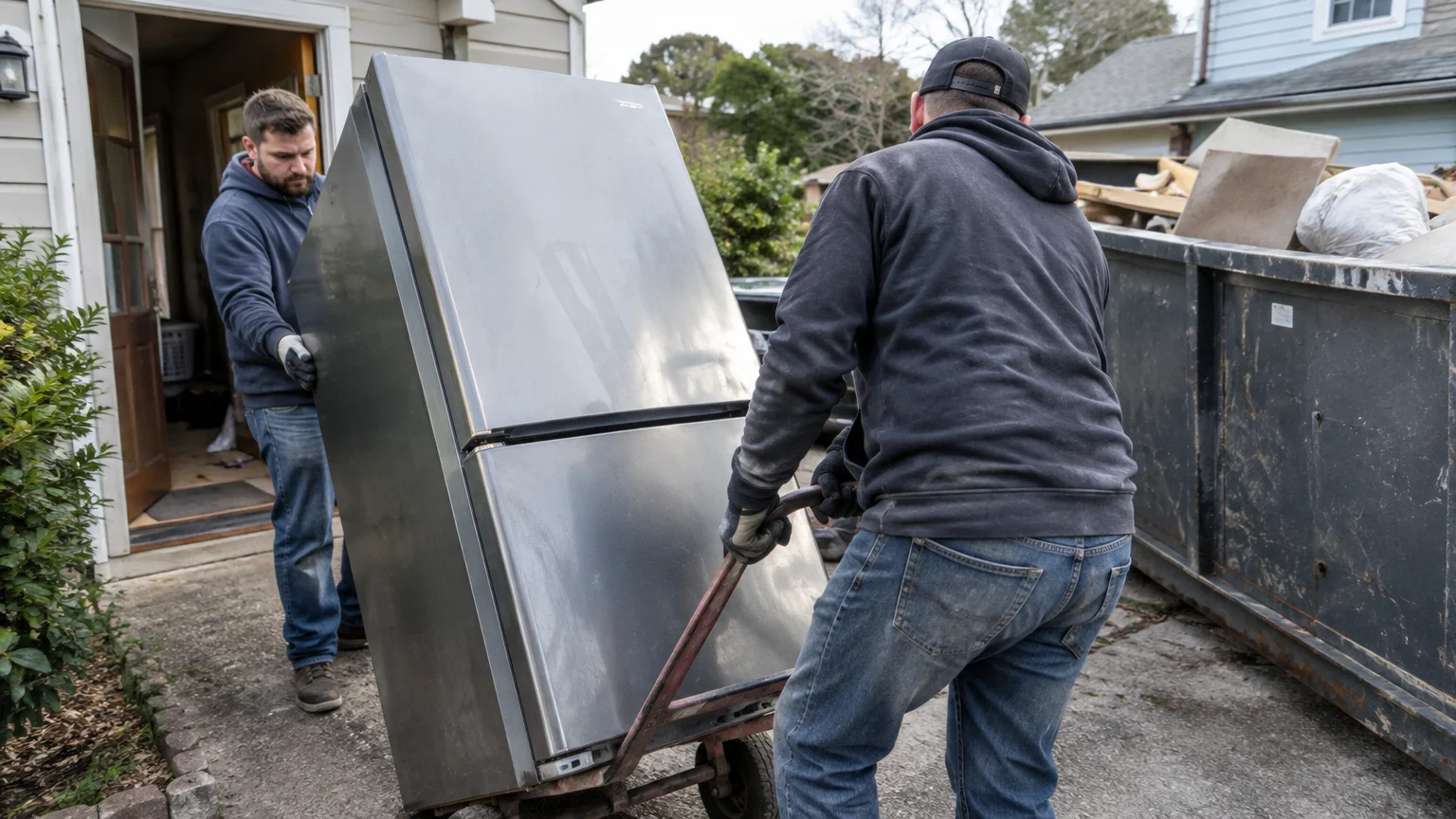
Appliance pickup is often the better choice for one large appliance. A crew can move it, load it, and haul it away. This helps when the item sits inside a home, basement, garage, or narrow side yard.
A dumpster may work better for many kinds of waste. It gives a homeowner or contractor a place to put approved debris during a project. The person doing the work usually still carries each item to the container.
How the two removal options work
Appliance pickup is a scheduled service. The homeowner lists the items and clears a path before the crew arrives. It also helps to mention stairs, narrow doors, gates, or other access limits.
The crew may move each appliance from its current spot. Workers can use moving tools and protect nearby floors or walls during loading. After pickup, the items may go for reuse, recycling, transfer, or disposal.
A dumpster is a large container placed at the property for a set time. The homeowner or project crew fills it with approved material. When the work ends, the container company returns to collect it.
Which type of project each option suits best
Appliance pickup often fits refrigerators, freezers, washers, dryers, stoves, dishwashers, and air-conditioning units. It may also suit a small household cleanout with furniture and other bulky items.
A dumpster may fit a kitchen remodel, flooring job, roofing project, estate cleanout, or large garage clearing. The best choice depends on the amount of waste, the available labor, and how soon the space must be clear.
Puyallup WA Junk Removal can help property owners compare these choices. A short list of the items and their locations gives the crew useful details before pickup.
What is included with appliance pickup?
Appliance pickup often includes collection, lifting, loading, and hauling. The exact work can vary by company and item. Homeowners should explain the full list before scheduling.
A pickup may cover one appliance or several items from one property. Some crews also collect furniture, boxes, and other nonhazardous junk during the same visit. The crew can explain which items belong in the load and which need another disposal route.
Common appliances that can be collected
Common appliances include refrigerators, freezers, washers, dryers, ovens, ranges, dishwashers, microwaves, and water heaters. Small appliances may also be accepted as part of a larger household removal job.
Some appliances contain refrigerant, oil, batteries, or electronic parts. These materials may need special handling. A homeowner should not assume every appliance can go in a dumpster or regular trash bin.
Clean and working appliances may be sent toward reuse. Broken units can contain steel, copper, aluminum, wiring, glass, and other useful materials. The process starts with a clear description of the item and its condition.
What homeowners should prepare before pickup
Refrigerators, freezers, washers, and dryers should be empty before the crew arrives. Remove food, water, clothing, and loose parts. Secure doors and shelves when needed.
The route from the appliance to the truck should be clear. Rugs, boxes, toys, and small furniture can cause trips. Children and pets should stay away while heavy items are moved.
Share these details before the appointment:
- The appliance type, size, and general condition
- The room or outdoor area where the item sits
- Stairs, narrow halls, gates, or steep driveways
- Whether the appliance connects to water, gas, or power
- Damage that could make the item harder to move
Workers should not disconnect gas lines, electrical systems, or unsafe connections unless that work is part of their service. Arrange safe disconnection before pickup when needed. A qualified person should handle gas and electrical work.
When is a dumpster rental the better choice?
A dumpster may be better when a project creates a large amount of debris over several days. It gives the work area one place for approved waste. This can reduce trips when a homeowner, contractor, or cleanup crew is already doing the labor.
A dumpster is less useful for one refrigerator or washer when lifting is the main problem. Someone still must carry the appliance from the home to the container. That move can harm floors, walls, doors, or the appliance.
Renovation debris and large-volume cleanouts
Dumpsters often fit flooring, cabinets, drywall, wood, tile, roofing materials, and other renovation waste. They may also suit a full garage cleanout or property cleanout with many smaller items.
Debris must be placed safely inside the container. Heavy pieces should not be stacked in an unstable way. Sharp materials need care, and prohibited items must stay out of the dumpster.
Review accepted-material rules before delivery. Paint, chemicals, propane tanks, tires, some electronics, and refrigerant appliances may need separate handling. Local rules can affect what a hauler accepts.
How long-term projects affect the decision
A long project may favor a dumpster because debris can go in as work continues. This can help during a remodel that does not finish in one day. The container must remain easy to reach during the agreed rental period.
A short job with a few bulky items may favor scheduled appliance pickup. There is little reason to keep a container on the property when the main task is removing old appliances.
Available space also matters. Driveways, alleys, and streets may have placement limits. Check property rules and ask about container placement before choosing this option.
How do appliance pickup and dumpster rental compare for heavy lifting?
Appliance pickup usually gives more help with heavy lifting. The crew moves the item from its location and loads it onto a truck. Dumpster rental usually leaves carrying and loading to the homeowner or project team.
This difference matters because appliances are both heavy and awkward. Their weight can shift while they move. Smooth sides can also make them hard to grip.
Who handles moving, loading, and hauling
With appliance pickup, workers bring tools and move the item together. They may use dollies, straps, ramps, blankets, and other equipment. The crew also controls how the appliance enters the vehicle.
With a dumpster, the property owner places debris inside. A contractor may do this during a remodel, depending on the work agreement. The dumpster company usually does not remove an appliance from inside the home just because the container is nearby.
Homeowners should not ask friends or family to move a large appliance without a plan. A poor lift can cause injury. A rushed move can also damage a doorway or finished floor.
Access challenges around the home
Access can change the better choice. Tight halls, basement stairs, raised thresholds, gates, and uneven ground can make self-loading hard. Tell the crew about these conditions before the appointment.
Measure narrow openings when possible. An appliance may need a door removed to fit through a tight space. A qualified person should plan that work instead of rushing it during the move.
Puyallup WA Junk Removal can ask Puyallup homeowners about access before arranging appliance removal. Clear details help the company bring the right tools and crew.
Which option is safer for removing large appliances?
Professional appliance pickup is often safer when a large appliance must leave the home. The crew can plan the route, use moving tools, and control the load. A dumpster can still work safely for smaller debris when loaders follow safe work rules.
Safety depends on the appliance, its location, its condition, and the people doing the work. Rust, broken glass, leaking fluids, and loose parts can add risks.
Risks of moving refrigerators, washers, and dryers
Refrigerators and freezers can be hard to control on stairs. Washers may hold water that spills while moving. Dryers can have sharp edges, and older appliances may have damaged cords or panels.
Some units connect to gas, water, or high-voltage power. A homeowner should not disconnect an unsafe connection without the right skills. Make the power source safe before moving the item.
Keep hands away from pinch points. Keep the appliance upright when its design requires it. Never place anyone beneath a lifted appliance or use makeshift supports.
Protecting floors, walls, doors, and driveways
Moving blankets and proper tools can help protect finished surfaces. Clear the route before the appliance starts moving. Open doors fully and move fragile decorations away.
Driveways can also suffer damage when heavy items are dragged. Use a dolly when suitable, and do not push the load across delicate surfaces. Watch for steps, cracks, wet ground, and loose gravel.
Homeowners can help by clearing clutter and keeping people away from the route. They do not need to lift the appliance when a professional pickup crew handles the job.
How are appliances disposed of or recycled?
Appliances may be reused, recycled, taken apart for parts, or disposed of when they cannot be recovered. The right path depends on the type, condition, and materials inside the item.
Recycling means separating useful materials so they can be processed again. It is different from placing an appliance in a landfill. A responsible hauler sorts items when practical and follows handling rules.
Refrigerant, metal, and electronic components
Refrigerators, freezers, and some air-conditioning units may contain refrigerant. Refrigerant is a chemical that moves heat inside cooling equipment. Ask how the service provider will recover and handle it.
Appliances also contain steel, copper, and aluminum. Motors, wiring, circuit boards, insulation, glass, and plastic may need separate processing. This is one reason appliances should not be treated like regular household trash.
Electronic controls and batteries may need a special recycling stream. Tell the service provider about unusual items, damaged batteries, or leaks before collection.
Why responsible disposal matters
Proper disposal helps reduce unsafe handling. It also keeps useful materials in use. It prevents appliances from being left beside roads, in empty lots, or where children and animals can reach them.
Ask where collected appliances go and whether special materials are handled. The answer can vary by local facilities and current acceptance rules.
For residents seeking local junk removal in Puyallup, disposal options may vary across Downtown Puyallup, South Hill, Sumner, Bonney Lake, Orting, Edgewood, and nearby communities. Puyallup WA Junk Removal can explain the planned handling process before the appointment.
What affects the cost of appliance pickup versus dumpster rental?
The final cost depends on the job, not only the appliance or container. Factors include the amount of material, number of items, labor, access, travel, disposal needs, and timing. The final cost is confirmed on a quote after the job details are reviewed.
Pickup and dumpster rental also cover different types of work. Pickup usually centers on labor and hauling. A dumpster centers on delivery, container space, the rental period, collection, and the material placed inside.
Volume, weight, labor, and access considerations
One appliance is usually a smaller removal job than a full home cleanout. Several appliances, heavy furniture, and dense debris need more labor and truck space. Difficult access can also change the work plan.
Basement stairs, long carries, narrow doors, and steep driveways may need more workers or special tools. Hazardous materials and refrigerant appliances may need a separate process. Share these details when asking for a quote.
A dumpster may be less suitable when it must stay for a long time but only a small amount of material will be added. It may also be a poor fit when the main issue is lifting items from inside the home.
When the final quote is confirmed
The final quote should be confirmed after the company understands the items, access, labor needs, and disposal requirements. Ask what the quote includes and whether special materials need separate approval.
Do not rely on a guess based only on an appliance photo or general service name. Clear information helps prevent confusion and supports a safer work plan.
How do you choose between appliance pickup and a dumpster?
The best choice comes down to four questions: what must go, who will lift it, how soon the space must be clear, and whether special materials are included. Appliance pickup usually fits bulky items. A dumpster usually fits ongoing debris work.
Think about space, access, and the amount of help available. A low container does not remove the need to carry heavy items from the house.
A practical decision checklist
Use this checklist when comparing the two options:
- Choose appliance pickup for one or several large appliances.
- Choose pickup when workers must carry items from inside the home.
- Choose a dumpster when renovation debris will build up over several days.
- Choose a dumpster when a project team can load it safely.
- Ask about handling for refrigerant, batteries, chemicals, and electronics.
- Confirm placement space, access limits, and accepted materials before scheduling.
Choose the method that matches the work, not only the container size. The safest option may be the one that removes the most lifting from the homeowner.
Combining removal methods for larger projects
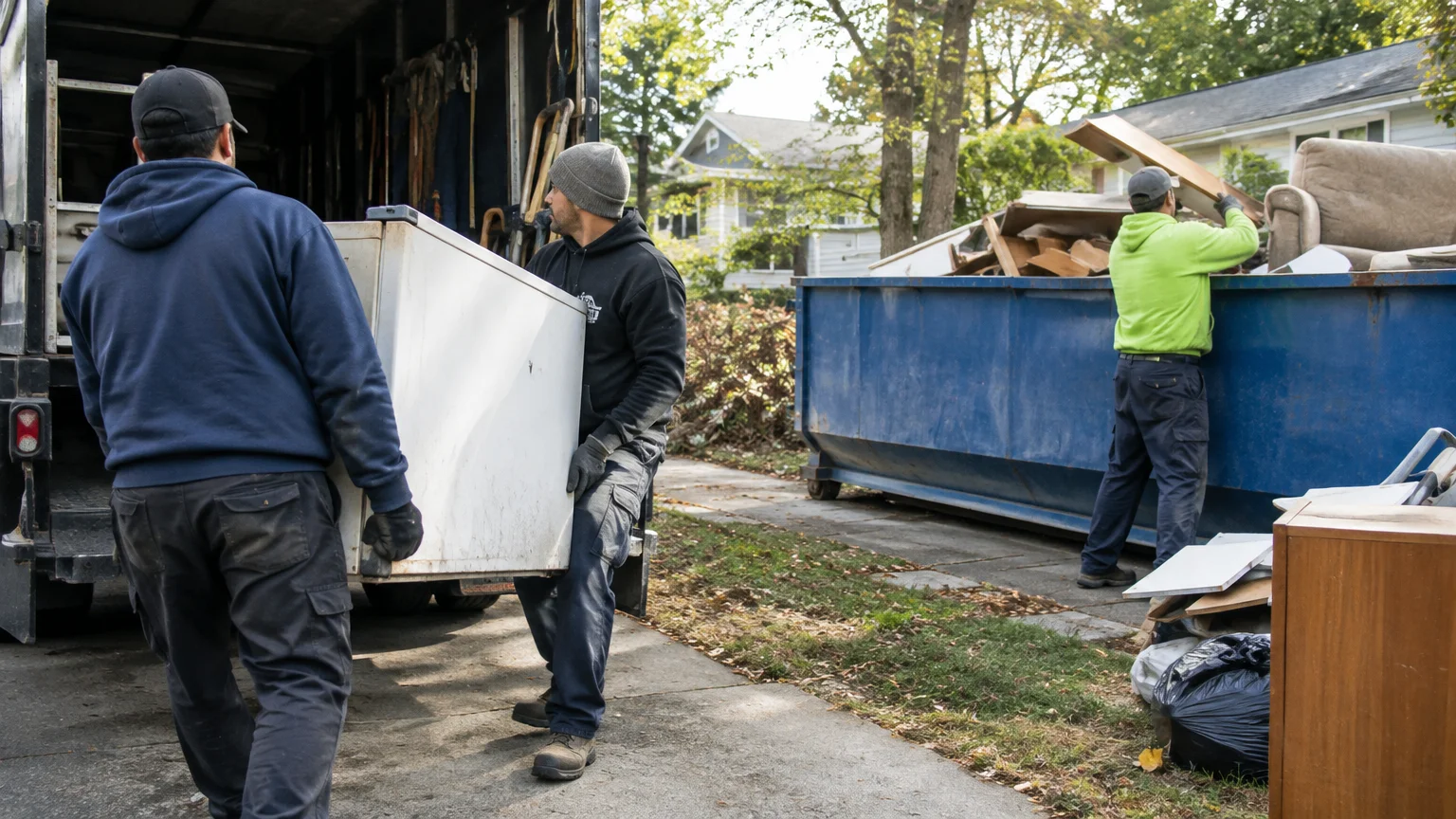
Some projects use both options. A dumpster can hold clean renovation debris while appliance pickup handles refrigerators, washers, dryers, and other bulky units. This keeps special items separate from general construction waste.
A combined plan works best when each provider knows what the other service will handle. Do not place restricted appliances or materials in a dumpster without approval.
What should homeowners know before scheduling appliance removal?
Make a list of every item before scheduling. Explain where each item sits and mention stairs, narrow paths, gates, slopes, or damage. Also say whether an appliance connects to power, gas, or water.
A clear list helps the company decide whether the job fits a standard pickup. It also helps the homeowner prepare the property and avoid delays.
Preparing appliances for collection
The appliance should be empty, dry when possible, and easy to reach. Clear food from refrigerators and freezers. A washer should not hold water or clothing, and a dryer should be empty.
Remove loose shelves, racks, trays, and personal items. Do not cut lines or disconnect unsafe systems unless you can do so safely. A qualified worker should handle gas and electrical concerns.
Clear the path from the item to the loading area. Children and pets should stay away while the crew works. Outdoor appliances should be free of branches, tools, and standing water.
Questions about prohibited or special items
Ask which appliances and materials the company accepts. Questions matter for items with refrigerant, fuel, chemicals, batteries, medical waste, or sharp damage.
The company may decline an item or suggest another facility. That does not mean the item cannot be handled. It means the item needs a route that matches its material and risk.
Ask how usable items are sorted and whether recyclable metals are separated. These questions help you choose a service that fits both the cleanup and disposal needs.
Key takeaways for choosing the right heavy-item removal option
- Appliance pickup usually fits one or several large household appliances.
- A dumpster usually fits renovation debris and large, ongoing cleanouts.
- Pickup gives more help with lifting, loading, and hauling from the home.
- Report stairs, tight spaces, connections, damage, and special materials.
- The final quote depends on job details and is confirmed before work begins.
The best choice for a single appliance or small cleanout
Appliance pickup is often the simpler choice for a refrigerator, freezer, washer, dryer, stove, or similar item. It reduces the need to move heavy equipment across the property. It can also keep special appliances separate from normal household debris.
A small cleanout may fit pickup as well, especially when it includes furniture or several bulky items. Describe the full load so the company can plan the visit.
The best choice for ongoing renovation debris
A dumpster often fits a remodel, demolition project, or long garage cleanout. It gives the project a place for approved debris as work continues. The property owner must still load it safely and follow accepted-material rules.
The best result comes from matching the service to the work. Puyallup WA Junk Removal helps property owners review the items, access, and disposal needs before choosing. Contact us to arrange appliance pickup and discuss the right removal plan.
Frequently Asked Questions
Is appliance pickup better than a dumpster for one refrigerator?
Usually, yes. Appliance pickup is made for bulky items that need lifting and hauling. A dumpster may require the homeowner to move the refrigerator from inside the home and load it alone. Ask about refrigerant handling before scheduling removal.
Can a washing machine go in a dumpster?
It depends on the dumpster company and local rules. Some providers do not accept appliances. Others may allow certain units with approval first. Never place a washer in a container without confirming that it is accepted and prepared correctly.
Who takes old freezers?
A junk removal company, appliance recycler, transfer facility, or local waste program may accept an old freezer. Freezers can contain refrigerant and should not be treated like regular trash. Describe the unit and ask how it will be handled before collection.
Can homeowners move large appliances themselves?
They can handle simple preparation, such as emptying the appliance and clearing the path. Moving the appliance is different. Large units can cause injury or property damage, especially on stairs or tight turns. Professional pickup is safer when special tools or several people are needed.
What should homeowners do with appliances that still work?
Working appliances may suit reuse, donation, resale, or a reuse program. Check the item’s condition, age, safety, and local rules. A removal company may help direct usable items toward reuse instead of general waste.
If you are not sure what you are dealing with, it is worth having someone look at it before it turns into a bigger job. Get in touch with Puyallup WA Junk Removal today and we will tell you where you stand.