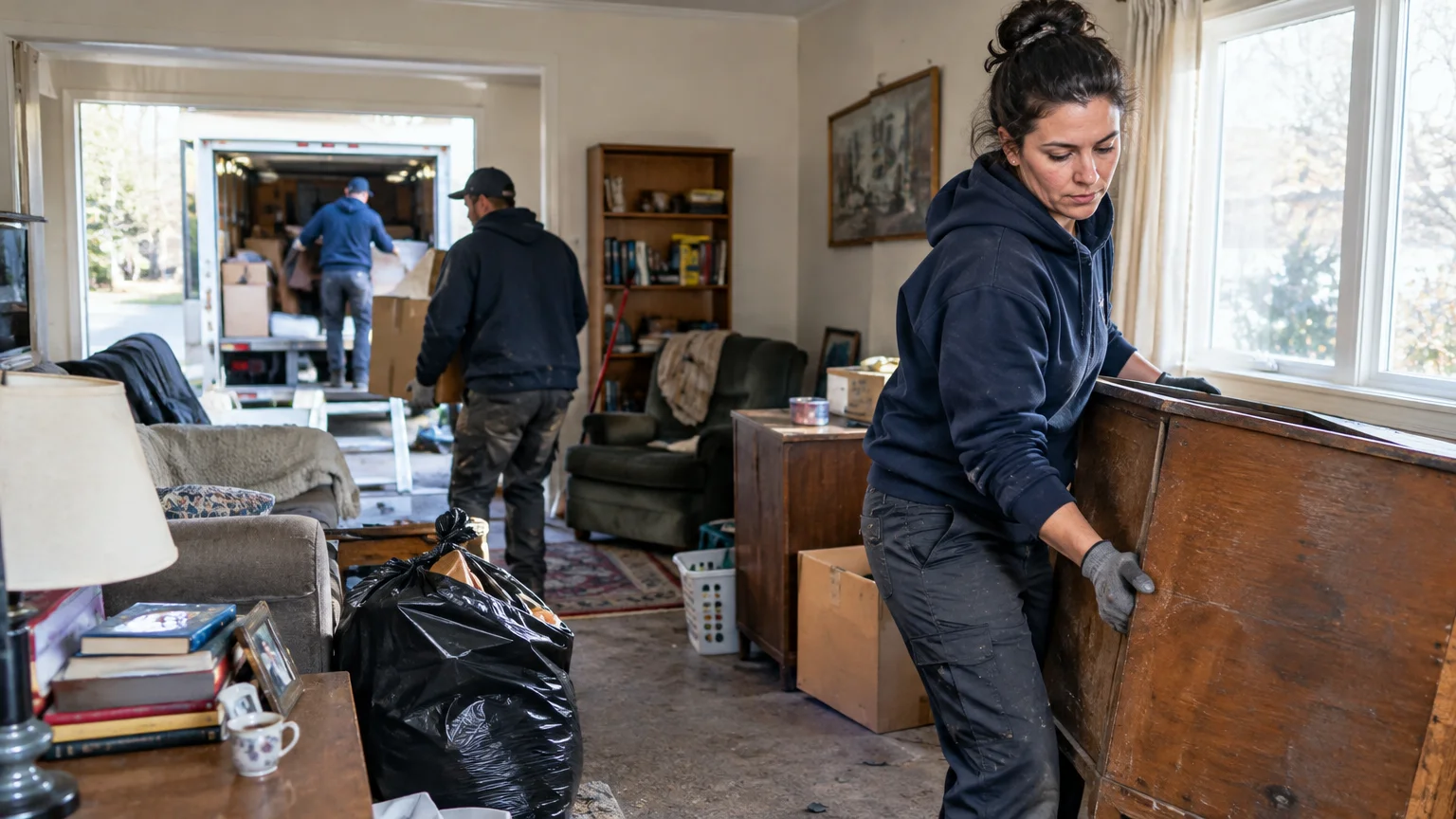
A full house cleanout feels easier when you work one area at a time. Make a room-by-room plan, protect valuables, and sort items before moving them. This guide explains how to prepare, what to handle yourself, and when a professional house cleanout team can help with heavy or unwanted items.
What should you do before starting a full house cleanout?
Before starting, make a plan for each room and decide what should happen to each item. A cleanout service can remove unwanted things, but you should protect papers, valuables, and keepsakes first.
Make a simple plan for each area
Walk through the home before carrying anything outside. List each room, attic, basement, garage, shed, and outdoor area that needs work. This keeps the project on track and helps you remember small spaces.
Start with a room that has less emotional value. A garage, laundry room, or storage closet may feel easier than a bedroom full of family items. Finishing one area can give you a clear plan for the rest of the home.
Set one goal for each work session. One session might cover a bedroom closet. Another might cover one garage wall. Short work periods can help you stay focused without feeling worn out.
Gather supplies and protect important items
Useful supplies include strong boxes, sturdy bags, labels, tape, gloves, a dust mask, and a marker. A flashlight can help in dark storage areas. A hand truck may help move large items, but use it only on safe paths.
Make a safe place for documents, jewelry, photos, keys, medicine, and other important items. Keep these things in a marked box or separate room. Tell family members that this area should not be touched during the cleanout.
A simple process can keep the work moving:
- Walk through the home and list each area that needs work.
- Remove papers, valuables, medicine, and important keepsakes.
- Gather boxes, bags, labels, gloves, and other supplies.
- Choose one small area and finish it before moving on.
- Set large items aside for a later removal plan.
Puyallup WA Junk Removal can help Puyallup homeowners choose a removal option for the size and type of project. Planning first also makes it easier to explain the job when arranging local help.
How do you sort household items during a major cleanout?
Sort each item into clear groups before moving it from the home. Common groups include keep, donate, recycle, sell, and remove. Clear labels limit confusion and help everyone follow the same plan.
Use simple categories that everyone understands
The keep group should contain items that are needed, used, or deeply valued. The donate group may include clean clothes, working household goods, and usable furniture. The recycle group may include paper, cardboard, metal, or some electronics, based on local rules.
The sell group works best for items in good shape that are worth the time needed to list them. A house cleanout sale may move several useful items, but it can also slow the project. Set a firm deadline. Items that do not sell by then need another plan.
The remove group can include broken furniture, worn mattresses, damaged items, and household junk that cannot be reused. It may also include items that are too large for normal trash service. A full-service junk removal company may collect these items, based on local rules and the materials involved.
Use labels that are easy to read. Colored tape can help, but plain words work well too. Keep each group in a separate area so the items do not get mixed again.
Handle sensitive and unsafe items with care
Sentimental items need extra time. You may want to keep one memory box instead of every item from a loved one. Photos can be scanned, and family members can choose items before anything leaves the home.
Check items that may have value before donating or removing them. These may include coins, tools, artwork, jewelry, collectibles, and old papers. A trained specialist may help when an item’s value or history is unclear.
Hazardous items need special care. Paint, fuel, chemicals, propane cylinders, pesticides, ammunition, and some batteries may need special disposal. Do not put them in normal trash or load them without knowing the local rules. The local solid waste authority can explain approved options.
Appliances also need a plan. Before removing a refrigerator, freezer, washer, dryer, or other large appliance, check whether a qualified person must disconnect it. Items with refrigerant may have special handling rules. Ask the removal provider what it accepts before the appointment.
How can you make a full house cleanout easier and safer?
A cleanout is easier when you move from small items to large ones. Keep paths clear, lift with care, and do not rush. Homeowners can sort and clean simple areas themselves, but heavy lifting and unsafe items may need professional help.
Reduce stress with small, steady tasks
Use the four-box method for small rooms: keep, donate, recycle, and remove. Add a sell area when needed. Do not fill boxes so heavily that they become unsafe to lift.
Work from high shelves down to the floor. This keeps dust and small items from falling onto clean areas. Keep doors and paths open. Place full bags and boxes in one staging area that does not block exits.
Take breaks and drink water. Good lighting helps you spot sharp edges, pests, mold, and water damage. If a room smells unsafe or shows signs of damage, stop and find the right kind of help.
You do not need a professional for basic sorting, sweeping, labeling, or wiping shelves. Professional help is more useful when the project has heavy items, tight stairs, large amounts of junk, or materials that cannot go in regular trash.
Prepare furniture and appliances for removal
Empty drawers, cabinets, and shelves before moving furniture. Check behind and under each piece for papers, coins, medicine, or small valuables. Remove loose shelves and parts only when it is safe.
For large appliances, clear a path from the item to the exit. Measure tight doorways if needed. Protect floors and walls with suitable covers, but do not drag heavy items. Never try to move a large appliance alone.
A hot tub, sectional sofa, piano, or heavy workbench may need several people and special tools. The same may be true for items in an attic, basement, or upper floor. Tell the removal provider about stairs, narrow doors, gates, and long paths from the home to the truck.
Do not cut wires, open sealed systems, break apart appliances, or handle unknown liquids. These actions can cause injury or release unsafe materials. A removal team can explain what it accepts and what needs another disposal option.
When should you hire help for a full house cleanout?
Professional help makes sense when a cleanout is too large, heavy, urgent, or emotional for one household. A local junk removal service can reduce lifting and help move unwanted items out in an orderly way.
Know when the project needs extra support
You may want help when several rooms are full, a move-out deadline is close, or the home has bulky furniture. An Estate cleanout service can help families manage a property after a loss. This may be useful when relatives live far away or cannot do the physical work.
Professional support may help when a home has narrow stairs, limited parking, heavy appliances, mattresses, construction debris, or a large garage pile. It may also help when a homeowner has limited mobility or cannot safely lift items.
The right provider should explain what it accepts, how the crew will reach the property, and whether some materials need separate handling. Ask about appliances, electronics, mattresses, tires, hot tubs, and other unusual items before scheduling.
What should homeowners expect from a removal service?
When arranging residential junk removal, share the property location, the areas involved, and the main types of items. Clear details help the company prepare for stairs, narrow access, large furniture, appliances, and other special needs.
The crew may review the items and path before starting. Point out anything that must stay. Keep pets and children away from work areas while items are carried out.
A full-service junk removal company may sort, lift, load, and haul accepted items away. The exact service depends on the provider, local disposal rules, and the materials present. The final cost is confirmed on a quote after the job details are reviewed.
Puyallup WA Junk Removal helps homeowners with organized residential cleanouts and nearby areas. Service areas may include Downtown Puyallup, South Hill, Sumner, Bonney Lake, Orting, Edgewood, and nearby communities.
Key takeaways
- Plan the home by room before carrying items outside.
- Keep documents, medicine, valuables, and keepsakes separate.
- Sort items into groups for keeping, donating, recycling, selling, and removal.
- Do not move hazardous materials or heavy items without proper support.
- Share access details and unusual items before arranging junk removal.
Frequently Asked Questions
What is a cleanout service?
A cleanout service removes unwanted items from a home, room, garage, attic, basement, or estate. Depending on the provider, the work may include carrying, loading, and hauling accepted items away. Ask what materials the company accepts before booking, especially chemicals, appliances, and unusual items.
How can someone get rid of an old refrigerator?
First, remove food and personal items. Then check whether a qualified person must disconnect the refrigerator. Refrigerators may contain refrigerant and may need special handling. Contact the local waste authority or a removal provider before moving one.
What happens to old appliances after removal?
Old appliances may be reused, recycled, donated, or sent to an approved disposal site. The result depends on the appliance’s condition, its materials, and local rules. Ask whether the provider accepts the appliance and whether it must be emptied or disconnected first.
How can someone get rid of a hot tub?
A hot tub often needs draining, safe disconnection, and careful breakdown before removal. It may require several workers and special tools because of its size and weight. Do not cut electrical lines or move one alone. A qualified removal team can explain a safe plan.
Conclusion
A full house cleanout does not need to happen all at once. A room-by-room plan, clear sorting groups, and safe habits can make the work feel manageable. When the job includes heavy furniture, appliances, estate belongings, or large amounts of household junk, Puyallup WA Junk Removal can help reduce the strain.
For help planning the next step, Contact us today about your cleanout.
If you are not sure what you are dealing with, it is worth having someone look at it before it turns into a bigger job. Find out more about our house cleanout in Puyallup. Get in touch with Puyallup WA Junk Removal today and we will tell you where you stand.